Protein
Protein
I wanted to talk a little bit about protein, a very important component in a well-rounded healthy diet, but that is often misunderstood. Protein is essential for the health of our skeletal muscular system, especially as we age, supporting not only our physical strength, but also immunity and vitality.
The subject of protein can sometimes be an emotional, political, environmental and reactive one. There are a myriad of conflicting expert opinions on the topic, and nutrition science is continually advancing to get more info. It can be overwhelming.
But there is no doubt, it’s important to look at our relationship with protein. Humans need protein, and probably more than we have been led to believe (especially women, and even more so women of perimenopausal age and above).
Muscle-loss around the perimenopausal years can be really harmful and this is in no small part linked to how much protein we eat (of course in addition to strength training).
Here's a short article on the importance of resistance training as we get older.
It is now (somewhat recently) understood that skeletal muscle is actually a vital organ, and plays a major role not only in being physically strong and holding our skeleton upright, but is actually an immune modulating organ. And with that, muscular strength is significant in healthy aging. The stronger we are, the more likely we are to overcome injuries, avoid falls and have the potential to live longer (or certainly a better quality of life).
According to Dr. Gabrielle Lyons, "The healthier your muscle mass, the greater your survivability across nearly all disease states, including cancer, cardio vascular disease and dementia..."
Protein keeps our hormones, brain, muscles and all other organs healthy. Protein also plays a role in keeping our blood sugar balanced and influences healthy lipid levels.
The best case scenario is that we eat a diverse range of different kinds of protein (even if you enjoy animal-based proteins, I really recommend exploring a wide variety of plant-based ones too, for your microbiome).
To support blood sugar balance, hormone health and muscle strength it's recommended that you break your fast (whenever that is), with a protein-rich meal (paired with fermented veggies). And that you consciously include protein in other meals throughout the day. This might be new for you, and therefore might take some adjusting.
Good news for plant eaters ~ even though we tend to think of "complete-protein" as only being found in meat, fish or eggs ~ by eating a wide range of plant-based protein combined, across the course of a day (and yet even more diversity across a week), you can still get complete protein.
But also, there are veggie options that are considered a complete protein (that which contains all nine essential amino acids)...including tofu, chia seeds, spirulina, nutritional yeast, hemp seeds, buckwheat, and quinoa.
Plant-based-diversity ~ and total protein diversity is really important.
So, throughout your diet, try to get a wide variety of different sources of protein. Just bear in mind, if you are a vegetarian, you will need to eat a lot more plant-based protein, to get your daily requirement.
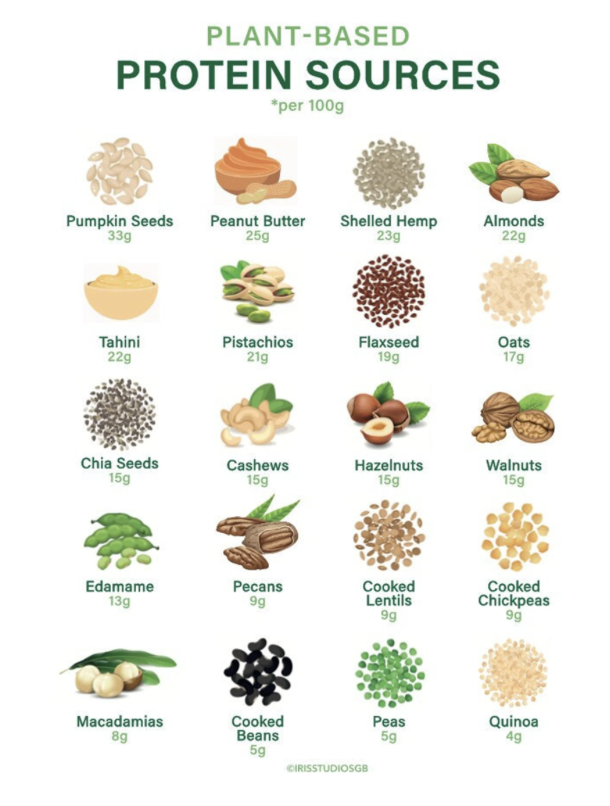
Plant-based-protein sources include, but are not limited to ~
Organic edamame & fermented organic soy products (avoid soy milk and certain soy protein powders, and only ever consume organic/fermented soy)
Legumes (so much variety here, try to consume all the different kinds - SOAKED for best absorption of proteins as well as adding vitamin c in the form of lime/lemon juice). Maybe make yourself some hummus (or other bean "dip") or the red lentil dosa or buckwheat galette as a bread alternative. Soaked legumes and nuts make protein more bioavailable.
Walnuts, hazelnuts, pecans & other kinds of nuts. If you are making your own nut milks, remember to SOAK your nuts first. But remember, eating nuts in their whole form is better for us than blended - especially if you are looking at pre-packaged "nut milks" - usually with so many extra crazy ingredients. Also note - nuts are very high in calories and they don't digest as easily as legumes.
Chia, pumpkin, sunflower, hemp, sesame (tahini recipe) and other kinds of seeds (as well as other kinds of seed "dips" or sauces.)
Broccoli, kale (you just need a LOT).
Spirulina, nutritional yeast, seaweed
Peanuts
Buckwheat, fonio, quinoa.
Pea, or other plant based protein powders (ensure the protein powder you choose is free from sugar and "fillers")
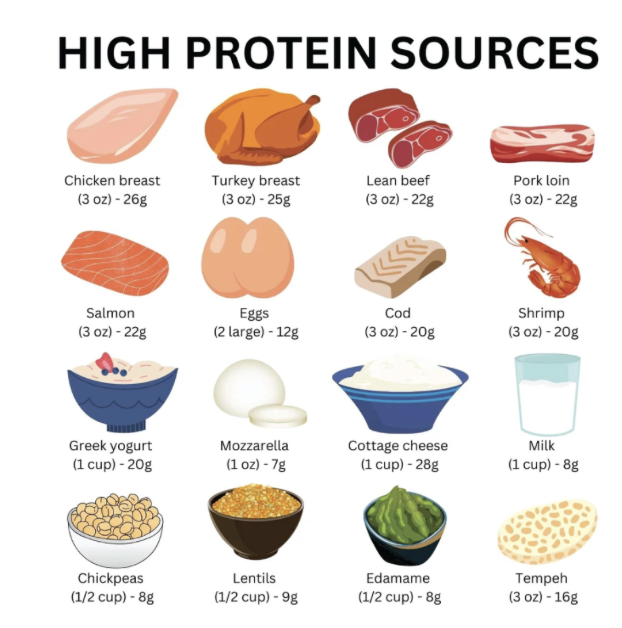
Protein does get stored in our bodies (which is a good thing)… so there can be such a thing as too much, BUT it is much harder to over-do it with plant-based proteins, as you will see below. Most of us probably need more than we are currently consuming (especially if you are plant-based).
And remember we must eat a lot of colorful, vibrant, plant-based FIBER as well ~ particularly if you eat mostly animal protein ~ in order to keep everything moving.
It’s also important that you are working your muscles consistently - for the purpose of longevity and general health.
I hope that's helpful. Also, some more resources: